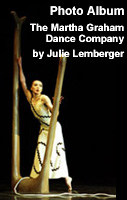
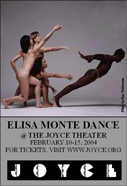
Featured Photo
Body
Wrappers
Flash Reviews
Banner Advertising
Become a Site Sponsor
E-Mail Advertising

Dance Insider Directory

Hot Classifieds
About/Contact
Subscribe!
Martha Graham
on The Dance Insider
The Buzz
by Paul Ben-Itzak
The Dancer's Life:
Advice from
Anne Wennerstrand
Vignettes
by Tobi Tobias
Gielgud Interviews
de Valois
Mason Interviews Stiefel
Insider Web Picks
Press
search

Latest Flash Reviews:
What's a Flash?

Support Independent Dance Journalism: To find out about sponsorship, advertising, and investment opportunities with the only magazine geared to professional dancers, e-mail publisher Paul Ben-Itzak.

"Dance Insider is my link to the rest of the world. Every time an article about the company is published there, I receive e-mails and phone calls from... all over the world. And not only from directors, but dancers, teachers, studio owners and ballet lovers." -- Marcello Angelini, artistic director, Tulsa Ballet


Flash Review, 7-3: On the road to Calcutta & Kerala
Pina Bausch listens to the 'Bamboo Blues'
By Laurie Uprichard
Copyright 2008 Laurie Uprichard

PARIS -- Lush is the word that first comes to mind when considering Pina Bausch's latest work, "Bamboo Blues," which had its French premiere at the Théatre de la Ville - Sarah Bernhardt on June 16 and which comes to the Brooklyn Academy of Music in December. The intense music, the saturated colors of the women's dresses, the film of a rich green bamboo forest (with visible power lines letting us know that civilization is nearby) that runs across a mid-stage curtain just before the intermission and at the end of the piece all invoke the tropical side of India. Bausch's two residencies there with visual designer and video maker Peter Pabst and some of her Tanztheater Wuppertal company, in Calcutta and Kerala, were the inspiration for this work. Pina Bausch is a maximalist. Click here for the full review...


Flash Review 2, 7-3: Rabbit Run
Ace ABT Cast Makes Tharp's Latest
By Gus Solomons jr
Copyright 2008 Gus Solomons jr

NEW YORK -- The program for the third week of American Ballet Theatre's spring season at the Metropolitan Opera House was a particular treat for fans of hard dancing. Harald Lander's 1948 "Etudes" -- a 50-minute-long buffet of the most difficult ballet steps -- shared the bill with the premiere of Twyla Tharp's "Rabbit and Rogue" featuring sexy, sheer costumes by Norma Kamali and a commissioned orchestral score by popular film composer Danny Elfman. Click here for the full review...


Flash Profile, 7-3: American Independent
Donald McKayle celebrates 60 years of dance-making
By Paul Ben-Itzak
Copyright 1998, 2008 Paul Ben-Itzak

(The Dance Insider is celebrating its 10th anniversary. This story was first published in the DI's inaugural Summer 1998 print issue, and is posted online today for the first time. 60 years after his first dance premiered at the American Dance Festival, Donald McKayle's latest work bows August 15 in Portland, Oregon, as part of the Northwest Professional Dance Project.)

Donald McKayle's hunger to dance was born one evening in 1947 at the High School of Trades in Manhattan's garment district, where a friend took him to see a concert by Pearl Primus. "I saw something I'd never seen before," McKayle remembers. "I said, 'I want to do that.' My friend said, 'There's a scholarship audition at the New Dance Group, where you can take class with Pearl.' And I said, 'No, I mean I want to do that tonight.' So we went back to her parents' house and pushed the chairs aside and she taught me part of Pearl's 'Dance of Springs.'"

Before there was Alvin Ailey, before there was Lar Lubovitch, before there was Eliot Feld, there was Donald McKayle, a giant of theatrical dance in whose troupe all of these men danced. Click here for the full article...


Dance Insider for Sale: The Dance Insider Online magazine, the only large-circulation international dance journal geared to professional dancers by focusing on dance performance, is seeking a buyer or investor to preserve, grow, and expand its mission of giving a voice to dancers. Contact publisher Paul Ben-Itzak.


Flash Review, 6-27: Forever Fancy-Full
Damian Woetzel says 'So long'
By Gus Solomons jr
Copyright 2008 Gus Solomons jr

NEW YORK -- Damian Woetzel has always been an energetic performer and a fierce technician. At his farewell performance on June 18, he said goodbye to the New York City Ballet, his dancing home since 1985, by dancing his heart out all evening. And he leaves the stage -- at a relatively young 41 -- at the peak of his powers. The packed house at the New York State Theater showed him the love and respect he's earned from his legion of fans; they showered the stage with flowers at the 20-minute final curtain call. His colleagues paraded from the wings one by one with bouquets and hugs for him. Among the well wishers were wizened Eliot Feld and American Ballet Theatre stars Ethan Stiefel and Angel Corella, who dashed across the plaza from the Met Opera House, where they're currently dancing the ABT season. Click here for the full review...


Flash Essay, 6-27: Rites of Artistic Identity
Of Harbingers and Abundance: The Mythic Appeal of "Le Sacre du Printemps"
By Marisa C. Hayes
Copyright 2008 Marisa C. Hayes

CHALON-SUR-SAONE (Saone-et-Loire), France -- Most are aware of the infamous episode in dance history when riots broke out at the Theatre des Champs-Elysees in Paris at the premiere of Nijinsky's "The Rite of Spring" in 1913, but surprisingly few dance writers or scholars have explored the ballet's undeniable appeal as a work that continues to be reshaped and regenerated on the global stage. As such, the ballet has become something of a two-way mirror, intimately reflecting the identities of the scores of dance-makers who have reinterpreted it. I pondered this recently as I witnessed the arrival of Marie Chouinard's company in France with her 50-minute "Le Sacre du Printemps" in tow. Chouinard created her version back in 1994, and 14 years later the piece continues to headline not only regional theaters (I caught the March 28 performance at Espace des Arts here in Burgundy), but celebrated venues for contemporary dance such as Paris's Theatre de la Ville - Sarah Bernhardt. While Chouinard's choreography looks less innovative these days, there's something more central to the heart of any "Sacre" (as it's affectionately called), not just hers, that warrants one reprise after another. Click here for the full Essay...


Flash Review, 6-20: Stolen Generation
Bangarra Tells Mathinna's Story
By Chloe Smethurst
Copyright 2008 Chloe Smethurst

MELBOURNE -- One of the greatest things about Stephen Page's choreography is the way he is able to tell a story through dance. Page's latest work for Bangarra Dance Theatre, "Mathinna," which premiered at the Victorian Arts Centre on May 16, is based on the true story of a Tasmanian aboriginal woman who was taken from her family as a child in the 1840s. The subject matter is an extremely topical issue both here in Australia and in Canada, with the prime ministers of both countries having recently apologized for the practice of taking indigenous children from their families. Click here for the full review...


Flash Flashback, 6-20: Walking the Line
Reichian Rosas; Propped up Cie 111; Fear of Fear
By Paul Ben-Itzak
Copyright 2007, 2008 Paul Ben-Itzak & The Dance Insider

(Editor's Note: To celebrate its 10th anniversary as the only dance publication apart from Ballet Review putting reviews of dance performances from around the world front and center, the Dance Insider is revisiting its Archive. This Flash was first published on May 3, 2007. Rosas's Steve Reich evening, with choreography by Anne Teresa De Keersmaeker and music by Steve Reich and Gyorgy Ligeti, comes to the Brooklyn Academy of Music's Next Wave festival with performances at the BAM Howard Gilman Opera House October 22 - 25. Compagnie 111 performs at the same space, with a different work than the one reviewed here, November 5, 7, and 8. )

PARIS -- There are certain dances that, simply put, justify Dance. Anne Teresa De Keersmaeker's 1982 "Fase," an excerpt of which ATDK's company Rosas performed in last night's Theatre de la Ville - Sarah Bernhardt opening of an all Steve Reich program, is one of those landmark works.

Like F. Scott Fitzgerald's novel "The Great Gatsby," "Fase" is deceptively simple on first viewing but reveals new layers and levels every additional time you see it. Last night, the luminous (and Bessie-winning) Cynthia Loemij and Tale Dolven, interpreting the "Piano Fase" segment of this masterpiece, evoked images and memories of girls at play. ATDK is nothing if not girlish and, indeed, I noticed this the first time I saw this dance, nearly a decade ago, performed by a flirty De Keersmaeker with Michelle Anne De Mey. This time, though, the duet was tinged with poignance -- particularly when Loemij leaned forward, as if precipitating into a memory, one leg extended behind her, before righting herself and returning to the present. Click here for the full review...


Flash Flashback, 6-13: Battling the Dark Spaces
In a World of Conflict, Gerard Violette & Padmini Chettur See Another Path

(Editor's Note: To celebrate its 10th anniversary as the only dance publication apart from Ballet Review putting reviews of dance performances from around the world front and center, the Dance Insider is revisiting its Archive. This Flash was first published on October 27, 2006. Last night at the Theatre de la Ville - Sarah Bernhardt, where he's stepping down as director after more than a quarter of a century, tout Paris paid homage to Gerard Violette, a presenter and producer whose astronomic ambition for and investment in dance and the performing arts has always been paralleled by a unique personal modesty.)

By Paul Ben-Itzak
Copyright 2006, 2008 The Dance Insider

Well darkness has a hunger that's insatiable
And lightness has a call that's hard to hear
I wrap my fear around me like a blanket
I sailed my ship of safety till I sank it, I'm crawling on your shore.

-- Indigo Girls, "Closer to Fine"

PARIS -- As inevitable as conflict may seem these days, the world offers choices. Gerard Violette, artistic director of the Theatre de la Ville -- arguably the most critical dance presenter in the world -- and its two spaces, closes his season-opening greetings by quoting from Albert Jacquard's "My Utopia" (Stock): "Nowadays, most encounters are opportunities for confrontation, struggle, prize-listing. Yet, nothing matters but the possibility to exchange. It is our view of the other that must be transformed. We must no longer consider him as a competitor.... What I would like to say is you may become what you choose to be. And that other people's happiness concurs to build one's own." To which Violette adds: "'Other views, exchange, other people's happiness....' You're in a theater." I read this Wednesday night sitting in TDLV's 380-seat les Abbesses theater up near the sky in Montmartre, where Padmini Chettur immediately proved the precept in "Paperdoll." Click here for the full review...


Letter from New York, 6-13: Novelty Acts
At the Chapel of St. Twyla with ABT & St. Vitus; Ratmansky-Shostakovich Concerto from NYCB
By Harris Green
Copyright 2008 Harris Green

NEW YORK -- Less than a week separated the spring season's two major premieres: Alexei Ratmansky's "Concerto DSCH" on the New York City Ballet, May 29 at the New York State Theater; and Twyla Tharp's "Rabbit and Rogue" from American Ballet Theatre, June 3 at the Met. The dancing at the subsequent performances I saw couldn't have been better. Each company now exhibits unprecedented strength at every level of the roster and consistently fields casts of uniform excellence. The brilliance of the dancing in both was so constant, so incessant it verged on monotony. Not until you looked beneath the breathtaking technique to know dancers from the dances could a gap of Grand Canyon-like vastness be found yawning between the two ballets. Click here for the full Letter...


Out of the Fog, 6-6: Ballet to Breakers
10 New Works in Three-Day Decathlon from America's Oldest Classical Troupe
By Aimée Ts’ao
Copyright 2008 Aimée Ts’ao

SAN FRANCISCO -- In the dance world, longevity is cause for celebration. Many dance companies are born and die within a short period of time because of a number of factors. Companies are often started by a single choreographer and succumb to lack of funding or the retirement/death of the founder. Ensuring the long-term survival of the work itself is also more difficult than in other realms. Unlike a painting that can hang on the wall of a museum for centuries, dance productions must be constantly resurrected and every single performance brought to life on the stage by ever-changing casts of dancers. That takes a lot of work and a lot of money. So San Francisco Ballet's 75th anniversary is an opportunity to acknowledge a feat of honorable proportions. Not many people remember when the company nearly went bankrupt in the mid-1970s, more than 30 years ago. I still recall the dancers in tutus panhandling in Union Square for the "Save Our Ballet" campaign. It is sobering to reflect on this company's history and acknowledge the thousands of people on both sides of the footlights, from the dancers to the standing-room balletomanes, from the costume seamstresses to the generous donors in the boxes who have kept it alive all these years.

San Francisco Ballet's 75th season went all out, with five programs of repertory works, one program of performances by three visiting ballet companies, display cases of artifacts and memorabilia in the lobby, lectures, a historical exhibit of stage design at the Museum of Performance and Design (formerly the Performing Arts Library and Museum), symposia on the future of classical ballet, and a reunion of former company dancers. The season culminated in the New Works Festival, a three-day marathon of ten new ballets by ten choreographers, eight of whom have worked with the company regularly over the past two decades. Click here for the full review...


Flash Review, 6-6: Horizons
Ying Sings His/Her Own Song
By Toni Taylor
Copyright 2008 Toni Taylor

NEW YORK -- A performance art piece with video, dance, and monologue which considers ideas of gender, sexuality and how how we turn out in those areas affects those who love us, specifically mothers, Hou Ying's "What is Your Horizon?," presented by the Dance Ying Group on May 9 and 10 at the Puffin Room, was a perfect Mother's Day weekend performance for a certain kind of mother. Click here for the full review...


Flash Review, 5-23: Dreams of Robbins
At City Ballet, Jerry Plays with the Russians
By Gus Solomons jr
Copyright 2008 Gus Solomons jr

NEW YORK -- On May 9 at the New York State Theater, the program performed by the New York City Ballet, part of its Jerome Robbins Celebration, was titled Russian Roots. Four works by the choreographer, set to Tchaikovsky, Prokofiev, and Stravinsky, showed the breadth of Robbins's range, but all resonated with the syncopated musicality and jazz inflection that we associate with his most identifiable Broadway show dances. Click here for the full review...


Flash Review 2, 5-23: Fired up and let down
Mee's "Fire Island" can't get started
By Alison D'Amato
Copyright 2008 Alison D'Amato

NEW YORK -- I was determined to have a good time at "Fire Island," the new work created by playwright Charles Mee and presented by 3 Legged-Dog media and theater group in Lower Manhattan. Seeing the show on May 1, two days before the end of its run, I had ample time to read other reviews and hear secondhand that the "multidimensional beach party!," as the show is sub-titled, was a sprawling and somewhat incoherent spectacle. I was prepared to let it wash over me, though, knowing that the experience wasn't going to be neatly framed and traditionally packaged.

Walking into 3LD was an event in itself. The front doors open into a stark white, spaceship-like hallway that doesn't necessarily evoke a hedonistic beach party. But once I was inside the performance space, whimsical summery touches were everywhere. Audience members sprawled on blankets and beach chairs, a hot dog cart supplied food for a pre-show barbecue and big buckets were filled with ice and bottles of beer. The "Fire Island" team was pretty aggressively committed to its audience enjoying themselves. I must have had a tentative look in my face, because a woman in a short pink dress approached and said "Go ahead! Sit anywhere. There's beer in the buckets, wine on the table over there, and I think the food cart is still serving." I asked if the drinks were by donation. "No, no! Everything's totally free!" Since when have you been treated that well at the theater? Click here for the full review...


Flash Flashback, 5-23: Dancing with Disaster
Sasha Waltzes with the Tsunamis
By Paul Ben-Itzak
Copyright 2006, 2008 The Dance Insider

(Editor's Note: To celebrate its 10th anniversary, the Dance Insider is revisiting its Archive. This Flash was first published on May 19, 2006. Sasha Waltz and Guests perform Waltz's breakthrough piece "Travelogue I" through tomorrow at the Theatre de la Ville - Sarah Bernhardt.)

PARIS -- Speaking of would-be choreographer-healers, as Chappelle Chambers does today in her Flash of Heidi Latsky, personal illness isn't the only malady dance makers would treat these days. If I had a Euro for every press release I receive that promises a response to the all the disaster, death, and destruction, I'd be writing you right now from my own private island (buttressed by Bechtel, bien sur). Unfortunately, like Wim Vandekeybus's recent torture fest, in the end most of these efforts that I've seen simply replicate the dark deeds without offering any kind of real response, invariably leaving me asking, "You're dancers; what do you know about suffering?" I'm not saying artists need to solve or cure our troubles; but where they have promised a response to them, I think it's fair to expect that they're going to use the tools available to them to shed some light.

For her new "Gezeiten" (Tides), receiving its French premiere through tomorrow night at the Theatre de la Ville - Sarah Bernhardt, Sasha Waltz wanted to use her skills "to give an account" of how our constant exposure to natural and man-made disasters -- in this age of information globalization -- affects us individually and as a society. She also wanted, she says in the program notes, to exploit that the theater setting would not allow us to simply switch the channel but assign "more active participation" to the spectators. Like Ernest Borgnine on the Poseidon, we'd be trapped. Click here for the full review...


Letter from London, 5-16: Like the....
New Menageries from Phoenix Dance Theatre
By Josephine Leask
Copyright 2008 Josephine Leask

LONDON -- Under the directorship of Javier de Frutos, who was appointed almost two years ago, Phoenix Dance Theatre, from Leeds in northern England, has had an electrifying make-over. Phoenix is a company whose past is distinguished but not untroubled. Since its origins in the 1980s as a politically assertive 'black' dance troupe, the company has gone through several reincarnations and has always struggled with issues around identity which have sometimes got in the way of artistic integrity. Now, however, under de Frutos, Phoenix is comprised of a group of ten dancers, picked from around the globe; the director is quick to point out that these new dancers have been chosen because of their outstanding performance skills rather than the color of their skin. Click here for the full Letter...


Letter from the Coast, 5-16: Children's Hour
Too Much Opera, too Little Prince
By Jordan Winer
Copyright 2008 Jordan Winer

BERKELEY -- "It's opera?! I hate Opera! No fair! I'm NOT going!"
"But it's 'The Little Prince,' you liked that book."
"I don't care, remember 'The Magic Flute'!"

Seven-year-olds are quite good at reasoning, as my son Dashiell was proving. His mother once took him to a "family" performance of "The Magic Flute" at the San Francisco Opera and we never stopped hearing about how painful and terrible it was. Even Faye, my older daughter, was turned off by "The Magic Flute," but she, unlike Dash, was willing to give "The Little Prince" a try. Rachel Portman, the Academy Award winning composer ("Emma," "The Cider House Rules") created this after the Antoine de Saint-Exupéry novel in an effort to "write an opera that you could take a child to see and enjoy." With me and mine, in tow for the May 9 performance at Zellerbach Hall, she only partially succeeded. Click here for the full Letter...


Unhappy with shrinking dance coverage? Go out and make some of your own: The Dance Insider is growing and seeks additional volunteer dancer-critics and columnists in New York City, Chicago, Berlin, Brussels, Paris, London, and elsewhere. Qualified candidates must have experience as professional dance artists and be able to express themselves cogently and originally on dance performance and/or dance issues. E-mail resume and up to three writing samples to editor Paul Ben-Itzak.


Letter from New York, 5-9: Robbins Mill
Jerry's kids throw a birthday party
By Harris Green
Copyright 2008 Harris Green

NEW YORK -- New York City Ballet looked exceptionally sharp during the first week of its two-month spring season. Apparently it does make a difference not to have to spend over a month performing nothing but "Nutcracker" day after day before moving on to repertory -- and please understand I am second to none in my admiration for Balanchine's sumptuous, definitive setting of Tchaikovsky. The spring season, officially dubbed the "Jerome Robbins Celebration" in honor of what would have been the late co-ballet master in chief's 90th birthday, also promised an exceptionally challenging repertory: 33 Robbins ballets, or six more than were performed during the company's 1990 salute, which lasted a mere three weeks. Balanchine and other choreographers will be represented, of course, but this is undeniably a Jerry-built season. Click here for the full Letter...


Letter from New York 2, 5-9: Transitions
Curran goes with the current and finds the flow
By Catey Ott
Copyright 2008 Catey Ott

NEW YORK -- For more than a decade, Sean Curran has been distinguished by his eloquently idiosyncratic theatrical solos. He is 100% present and unreservedly honest while projecting his body, mind, and spirit through the characters he brings to life on the stage. His innate musicality and sense of rhythm, evocative and imaginative shape-making, and a movement style that draws equally on gestural originality and technical finesse make him an outstanding dance artist.

Since 1997, when he founded his own company, Curran has also been exploring group choreography. Through this work, he further developed his sense of physicality and style, continued to be inspired by themes close to his heart, and found a systematic way of making dances that made sense to him. In Curran's early ensemble work, his sweet, clever, highly committed and dedicated personality came through, yet his divine theatricality and soloist sensibility had not yet fully translated into his dancers' aesthetics. Click here for the full Letter...


Flash Flashback, 5-9: Current Curran
Into the Deep with Sean... and Company
By Alicia Mosier Chesser
Copyright 2002, 2008 Alicia Mosier Chesser

(Editor's Note: To celebrate its 10th anniversary, the Dance Insider is revisiting its Archive. This Flash was first published on March 7, 2002.)

NEW YORK -- Trust Sean Curran to make you weep, then help you forget your troubles, then set you musing and still your heart to peace -- all in the space of 90 minutes on a little black box of a stage. The Sean Curran Company opened its season at the Duke on 42nd Street last night, under the auspices of the 92nd Street Y Harkness Dance Project, with three works (two of them premieres) that gleamed with dense, deft movement and subtle emotion. Curran's style, both as a dancer and as a choreographer, is unmannered and unmelodramatic. He tells you in his movement just what he is doing; he doesn't play games, or if he does, he lets you in on them. It's that straightforwardness that emboldens you to go with him wherever he might lead -- which takes you, more often than not, right into the deep. Click here for the full review...


Letter from New York, 5-2: From Petersburg to PoMo
A Ballet Gold Standard and Mettlesome Postmodern Baser Metals
By Gus Solomons jr
Copyright 2008 Gus Solomons jr

Kirov Ballet

NEW YORK -- The legendary company from St. Petersburg danced a three-week season at City Center, where the stage could barely contain its lavish classical productions (reviewed here). But for the program (April 15-17) which featured the ballets of William Forsythe, the stage size was just right, and the repertoire choices showed a nice balance of his work.

In the April 16 performance, "Steptext" (1985), which deconstructs theatrical convention -- house lights out, stage lights up, dance to the music -- begins while the house lights are still on with a male dancer (Alexander Sergeev) onstage in a wide second position, doing a stretchy, lunging phrase. A second man (Mikhail Lobukhin) enters, as the house dims, and repeats the phrase. A snatch of Bach's Chaconne from his Partita No. 2 in D minor blasts on. During the course of the piece, the lights black out at random moments, the front curtain even descends and rises again midway through.

Tall, rail-thin Ekaterina Kondaurova in a neon red unitard wags her arms in intricate semaphore, downstage left. The men pass her between them, tilting her at rakish angles, flipping her into shockingly splayed extensions. These Forsythe ballets are all about physicality, and here, the Kirov dancers' hyper flexibility and technical prowess adds drama to the motion, rather than obscuring the expressive intention, as it sometimes does in the 19th century ballets. Click here for the full Letter...


Flash Review, 5-2: Partner Dances
About Tango, About Intimacy -- and About Tulsa
By Alicia Chesser
Copyright 2008 Alicia Chesser
Photography copyright Christopher Jean-Richard

TULSA -- To look at what Marcello Angelini has accomplished in 13 years at Tulsa Ballet is to see what a community-based arts revolution looks like. Thirteen years of serious imagining, planning, fundraising, and creating have resulted not only in the development of a company recognized for excellence at home and abroad, but now also in a newly renovated and expanded rehearsal and school facility and an adjacent very modern, very spectacular $5 million theater, Studio K - Kivisto Hall, dedicated to the creation of new work. The April 24 opening of the paint-not-even-dry 300-seat black box ("Don't fall asleep tonight, because we can see you from here!" Angelini joked before the performance) featured three new ballets, under the rubric "About Tango." This massive civic undertaking, which took 19 months to complete, involved local philanthropists, a local construction company, and an architect, Kathleen Page, who just happens to have danced with Tulsa Ballet back in the Roman Jasinski / Moscelyne Larkin days. As TB's foremost financial supporter, Tom Kivisto, noted before the show, "to party" in Tulsa means not to have a fancy soiree at one's home, but "to raise money for some great charity." (Such is the magnetism of TB these days that Kivisto was pulled in after seeing just one rehearsal; he had never even seen the company perform until two years ago.) Click here for the full review...


Letter from New York #1, 4-25: Somewhere Past the Rainbow
Lessons in Color from Our Mr. Brooks
By Chris Dohse
Copyright 2008 Chris Dohse
Photography by Julie Lemberger

NEW YORK -- I trust color. Nothing in it lies. Brian Brooks has built the first leg of what promises to be a long and rich career from isolating fistfuls of Crayola hues into evenings of delight, surprise and physical daring.

The 10th anniversary season of Brian Brooks Moving Company, simply called "10 Year Retrospective" and seen March 15 at the Ailey Citigroup Theater as part of the 92nd Street Y Harkness Dance Festival, was divided into two parts. The first act folded together excerpts from "Faster!" (2001; orange), "Dance-o-Matic" (2002; pink), "Acre" (2004; green), "Pinata" (2005; black and white) and "Again Again" (2006; tan). Act two premiered a working version of "Happy Lucky Sun."

In a nutshell, the barrage of excerpts failed to capture the bratty sense of fun that I felt when seeing two of the evenings in their entirety. (I reviewed "Faster" and "Dance-o-Matic" for this journal.) In these early works, Brooks had the balls (and the boas) to carve a unique position: sexy, saucy, deadpan, and pomo. Careened into each other, the fragments of a decade didn't quite communicate this glee, and seemed garish artifacts. Click here for the full Letter...


Letter from New York #2, 4-25: The Russians are Coming! Without their Director!
Brave Solo Turns Highlight Uneven Kirov Programs
By Harris Green
Copyright 2008 Harris Green

NEW YORK -- The Kirov -- or, if you prefer, the Mariinsky -- Ballet managed to fit into the confines of New York's City Center by traveling light. Even its director Makhar Vaziev was left behind after apparently withering into such a Soviet-style nonperson under the dissatisfaction of artistic and general director Valery Gergiev that he wasn't even listed among the administration and staff until the final week of the April 1-20 visit.

All the evening-length Petipa classics and half the company remained in St. Petersburg. I'm told The Kingdom of Shadows -- or, if you prefer, Shades -- from Petipa's "La Bayadere" lacked its ramp. Harald Lander's "Etudes" was shorn of its kiddie corps. Fokine's "Le Spectre de la Rose" was given in a touring set so barren it looked like the ballerina (Yana Selina) had just moved in and the armchair was the only furniture that had been delivered. "Spectre" looked rather skimpy, too, as "reconstructed" by Fokine's daughter Isabelle. Compared to the tighter, more focused version danced by American Ballet Theatre, the steps seemed to be strewn all over the stage. Anton Korsakov's long-stemmed Spectre, with arms and wrists rippling like Plisetskaya's, lacked the power to pull it together. After his exit leap through the window, Korsakov was not only seen to land, he was heard to land. "The Dying Swan," not credited to anyone but Fokine, was better served by Uliana Lopatkina; her final tremor was enough to prevent this well-worn solo from being totally abandoned to the crossdressing troupes. Click here for the full Letter...


Flash Focus, 4-18: Think Globally, Act Regionally
Angelini Builds a New Home for New Dance; Lustig Smashes the Ceiling
By Paul Ben-Itzak
Copyright 2008 Paul Ben-Itzak

Recently I received the Royal Ballet's programming announcement for next season. I had trouble keeping my eyelids open. The same old dinosaurs being trotted out, whether in tired versions of classics or tired names of supposedly original modern ballet choreographers. Fortunately, where many of the large ballet companies have failed to imagine, the companies we big-city types used to condescendingly refer to as "regional" (as in, 'not bad for a regional company') have come through, commissioning new work with traction from choreographers not named Wheeldon, encouraging untested voices to work in the ballet idiom without sacrificing classic values or, like many European ballet companies (Lyon comes to mind) resorting to extra-dance elements like text and 'technology.' At the top of this list are Marcello Angelini's Tulsa Ballet and Graham Lustig's American Repertory Ballet. Click here for the full article...


Flash Flashback, 4-18: Full Words
Preljocaj Caged by Cage, Married with Violence
By Paul Ben-Itzak
Copyright 2006, 2008 Paul Ben-Itzak

(Editor's Note: To celebrate its 10th anniversary, the Dance Insider is revisiting its Archive. This Flash Review was first published on April 5, 2006. "Empty Moves" (Part 1 & 2) will be performed April 28 & 29 in Dublin as part of the newly renamed and annual Dublin Dance Festival, which opened last night in its first year under the direction of Laurie Uprichard, former executive director of Danspace Project.)

PARIS -- It was with a bit of skepticism that I took my seat last night for Ballet Preljocaj's opening performance at the Theatre de la Ville - Sarah Bernhardt. The program notes promised dance for the "pure pleasure" of dance from artistic director Angelin Preljocaj, but recent experience with prop-laden Preljocaj augured otherwise. I was there, nonetheless, for the opportunity to see his classic 1989 "Noces" again, to the Stravinsky score, as well as the 2004 "Empty Moves," the program opener, which lured me with its promised John Cage soundtrack. If the movement that unrolled in the first piece did indeed exude the promised "passion of movement," exuberantly executed by Isabelle Arnaud particularly and also Lorena O'Neill, Yan Giraldou, and Thomas Michaux, the choreographer rather undermined himself by the choice of this particular Cage recording, which in effect gave us a total of three concerts to contend with. Click here for the full review...


Flash Response, 4-11: DTW's Eviction of Ellen Robbins
A Total Turn-around of the DTW Mission

(Editor's Note: After more than 30 years of giving renowned children's creative movement classes at Dance Theater Workshop, internationally revered and respected teacher Ellen Robbins is being evicted by DTW artistic director Carla Peterson and executive director Stephen Greco.The decision has set off a firestorm in the dance community. Following is one response, reprinted from DTW's blog with the author's permission. More reaction can be found here. )

By Katie Bull
Copyright 2008 Katie Bull

Shame on this egregiously bad judgement for the eviction of Ellen Robbins. My name is Katie Bull. I am a jazz vocalist, playwright, director, professional vocal coach, and teacher at New York University's Atlantic Theater Company Studio, where I am also the head of the vocal production program for their professional classes. Growing up in New York City in the 1960s and 1970s with my father, dancer/choreographer Richard Bull and my step-mother, dancer/choreographer and dance anthropologist Cynthia Novack, Ellen Robbins and DTW was a fixture. My parents were dedicated to dance improvisation as a performance art way before it was an acceptable idea, and ELLEN was and IS a pioneer in that regard, teaching choreographic improvisation and incorporating improvisational options into performances for children who are THE NEXT GENERATION OF ARTISTS. I was beyond proud when -- all these years later -- Ellen accepted my daughter, Hannajane Prichett, into her program at DTW. Hannajane is now one of Ellen's students and recently performed on the mainstage in Ellen's DTW Family Matters. EVICT ELLEN ROBBINS? What are you people thinking? Click here for the full letter...


Letter from New York, 4-11: A Rose By Any Other Name, Please!
(But Nelson's Still Smells As Sweet)
By Melinda Lee
Copyright 2008 Melinda Lee

NEW YORK -- At the start of Jeremy Nelson's restaging of his 2006 "Mean Piece," seen March 14 on a double bill with the premiere of "Sail," the space darkens and the performers are heard booming heavily into place. Regulars to performances hosted by Danspace Project (DSP) in this formidable sanctuary of St. Mark's Church probably relish the spongy-footed boom boom of dancers' feet walking into position. It's a clear, coded tradition that signals a hush, a caught breath, and an ooh ooh! -- something exciting is about to happen! Yet DSP is set up like a proscenium stage tonight, and already some of its magic on me is lost. Luis Lara Malvacias's vast canvas and string cyclorama hangs in such a way as to cut us off from the church's iconic altar, but the looming curve of the altar's still visible upper arches begs me to notice that we are STILL in a uniquely totalizing space. I have to ask myself at the sound of the herd's purposeful, predictable tread: is all of this going to be a little flat? Click here for the full Letter...


Flash Review, 4-4: Little Joys, Perturbations
Dances on a Pendulum from New York Theatre Ballet
By Nicholas Birns
Copyright 2008 Nicholas Birns
Illustration by Robin Hoffman
Photograph by Richard Termine

NEW YORK -- Combining principles of community service with those of dance preservation and innovation, all in the intimate setting of a dance studio in a church building off Madison Avenue, New York Theatre Ballet's Dance on a Shoestring series is far from your typical repertory evening.

At the March 14 performance I attended, augmenting the festive atmosphere -- and inspiring the adults in the audience to enjoy dance with the innocence and vibrancy it deserves -- were the small children who bounded the front row, most likely students in the company's "LIFT" program, which serves homeless and otherwise at-risk kids in New York City. During the evening's final dance, Antony Tudor's "Little Improvisations," a little girl holding a fan made as if to rush the stage and had to be restrained by a nearby adult; her exuberance was understandable. Click here for the full review...


Flash Flashback, 4-4: The British are Coming Out! The British are Coming Out!
Bintley's Brits Give a Schooling
By Mark Dendy
Copyright 2000, 2008 Mark Dendy

(Editor's Note: To celebrate its 10th anniversary, the Dance Insider is revisiting its Archive. This Flash Review was first published on September 29, 2000. Mark Dendy, phone home!)

Does the mother country have something to teach us about coming out in the opera house? We Americans tend to think of ourselves as the frontiersmen when it comes to art and homo art and new ideas and graphic sexual content onstage. It's the Brits who are uptight, stuffy, conservative. Watching David Bintley's Birmingham Royal Ballet production of "Edward II" at City Center the other night, I was reminded that this country was founded by people who were so uptight the British kicked them out! Click here for the full review...


Flash News, 4-1: Cultural Relevance
Dance/USA Mobilizes for Jowitt
By I.B. Foo-lin
Copyright 2008 I.B. Foo-lin

NEW YORK -- In a decisively vigorous response to the Village Voice's firing of dance critic Deborah Jowitt last week and its elimination of the dance critic position, officials of Dance/ USA interrupted their weekly dance criticism study group and suspended their massive dance funding lobbying efforts to descend on Greenwich Village and lead dancers and presenters in picketing the offices of the venerable alternative weekly. Click here for the full article...


Flash Extra, 3-29: Village Voice Fires Deborah Jowitt after 40 years and eliminates dance critic position.


Letter from New York, 3-28: I can dream... Can I?
Streams of Repertory from Paul Taylor
By Harris Green
Copyright 2008 Harris Green

Photography by Lois Greenfield and Tom Caravaglia

Describing Paul Taylor's City Center season (February 28 - March 16) as a "dream" was more than hyperventilating press agentry. Among the 19 dances presented were several that many admirers probably had dreamed about seeing again, such as "Equinox" (1983) and "Diggity" (1978). Dreams were at the heart of the two novelties on Mexican themes, both created in 2007: "De Sueños" ("Of Dreams") and "De Sueños que se Repiten" ("Of Recurring Dreams"). Click here for the full Letter...


Flash Flashback, 3-28: It Must Have Been the 'Roses'
March, Snow, and Taylor: Springtime in New York
By Nancy Dalva
Copyright 2003, 2008 Nancy Dalva

(To celebrate its 10th anniversary, the Dance Insider is revisiting its Archive. This Flash Journal was first published on March 13, 2003. To read about the Paul Taylor Dance Company's 2008 New York season, click here.)

NEW YORK -- Just before the Paul Taylor Dance Company season opened at City Center (where it continues through Sunday), someone accused me of thinking that Paul Taylor can do no wrong. This isn't quite the case. I think Taylor might make a cynical dance, on occasion, or a generic one. But he's one of the great artists of his day, which has been long and ripe with accomplishment. He's great minded. He's painterly; he's musical. He's a fabulist, in any medium, and every one of his lies tells the truth, on stage or in print. (His 1987 autobiography "Private Domain" is a triumph of magic realism, and tells you more about the work than an historian or critic ever could.) His current company is beautiful, and buoyant, and how he keeps going at this I'll never know. How can you look at "Images" (1977) and not fall apart, remembering the prodigal Chris Gillis? Or at 1983's "Snow White," without remembering sunlit Jeff Wadlington carrying on as a dwarf? How can you not think of them dying of AIDS, and Taylor having to say goodbye? Taylor's perseverance must cost him, and I'm grateful to him for keeping on. Click here for the full review...


Letter from New York, 3-21: Mining the Lore, Planting the Seeds
Pasion Flamenca: Dance Globally, Produce Locally
By Anna Arias Rubio
Copyright 2008 Anna Arias Rubio

NEW YORK -- There's an element of the surreal in New York-based Pasion Flamenca's "Flamencolorico: Lore of the Miners," seen February 8 at the Helen Mills Theater. Produced by the New York Center for Flamenco Performing Arts, choreographed by Antony Hidalgo, with music by third generation flamenco guitarist Pedro Cortes Jr. based almost entirely on Flamenco mining songs from Jaen, Murcia, and Almeria and descended from the fandango, and directed by Jorge Navarro, the work is at once the story of a family of miners in Andalucia and of a family of artists who for 40 years have helped lay the foundry for Flamenco in Manhattan. Click here for the full Letter...


image

The Dance Insider Illustration, 3-14: Dancescapes
Ananiashvili Brings it Home

Art & Text by Robin Hoffman
Copyright 2008 Robin Hoffman

Put in context, the unevenness shown by Nina Ananiashvili and the State Ballet of Georgia on February 29 at the Brooklyn Academy of Music pales compared to what they have achieved. Ananiashvili has only been working at the helm of the company since 2004, and she has transformed a broken institution into something presentable if not rivaling world-class just yet. Click here for the full feature...


The Buzz, 3-14: All the news that's fit to spit∗
Sheriff Spitzer, friend of Dance, hounded out of town by the Gray Lady
By Paul Ben-Itzak
Copyright 2008 Paul Ben-Itzak

(Dance Insider FlashBlast e-mail club members got this piece and other exclusive news, views, and free ticket offers earlier this week by e-mail. To receive the Dance Insider's free daily FlashBlast, click here then press send.)

In the Spring of 2002, when the Martha Graham Dance Company was taken to federal court by Martha Graham heir Ron Protas in what became a battle for control of the greatest legacy in modern dance, the MGDC didn't have a lot of resources but it had one powerful and credible friend: Eliot Spitzer. Click here for the full article...


The Buzz, 3-7: Stop your Sobbing
L.A. Times Eliminates its Dance Critic
By Paul Ben-Itzak
Copyright 2008 Paul Ben-Itzak

(Dance Insider FlashBlast e-mail club members got this news earlier this week by e-mail. To receive the Dance Insider's free daily FlashBlast, click here then press send.)

So one of the largest newspapers in the United States, based in the entertainment capital of the world, has decided that it cannot justify having one single solitary full-time dance critic on staff. Lewis Segal, the hardest working and most prodigious dance critic and reporter in the United States, has been told by his management at the Los Angeles Times that his position, that of dance critic, is being eliminated. On his supervisors' advice, Segal has applied for a buy-out; buy-out staffers are supposed to be gone by the end of the month. (Segal's supervisors also said they hoped he would freelance for the paper.) Click here for the full article...


Letter from London, 3-7: Next Stop, Rosas/P.A.R.T.S.
On the Brussels Express with De Keersmaeker & Charges
By Josephine Leask
Copyright 2008 Josephine Leask

LONDON -- To be able to arrive in Paris from London in two hours is a small miracle. To be able to do so in comfort and style is a big one. St Pancras International was officially opened on November 14 as the new London destination of the Eurostar; consequently continental Europe has never seemed closer to the British capital. Besides signifying an attempt to revive the jaded Anglo-French relationship by reaching across the Atlantic with outstretched arms, this opening represents a welcome rejuvenation of an intriguing central London neighborhood which has been until recently badly neglected. St Pancras station includes two of the most celebrated structures built in Britain in the Victorian era: the main train shed, completed in 1868, and the frontage of the station formed by St Pancras Chambers, a huge Victorian Gothic pile and formerly a hotel, built between 1868 and 1877. Dubbed the 'cathedral of railways,' in the 20th century it fell rapidly into disrepair following the closure of the hotel in 1935, while bombing from WW II inflicted damage to the roof of the train shed. In the '60s neighboring Euston station was rebuilt and expanded to become London's principal terminus for trains to Scotland and the north of England, which had previously departed from St Pancras. This left only a few suburban train services running from St Pancras, and the general inclination in London was to close the station once and for all, as it had become pretty much redundant. Click here for the full Letter...


Top of Page

For more Flash Reviews, click here.